
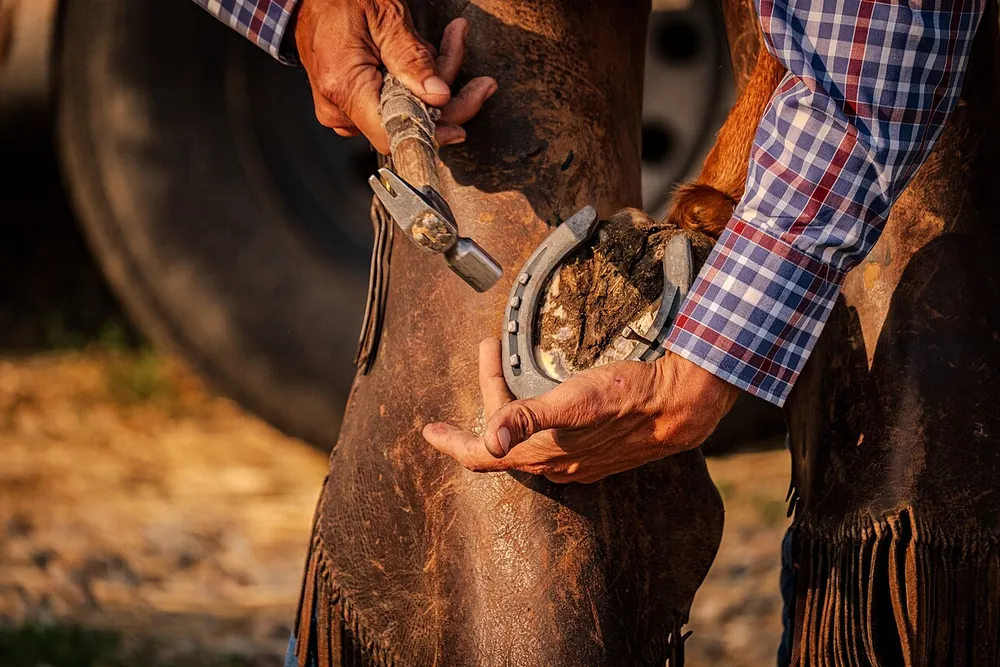
A hoof is not a horny boot but a living structure that works as a pump: it expands under load and drives blood up the leg. A neglected hoof therefore shows up in the whole horse, not just the gait.
The daily pick-out
Pick out the hooves every day, ideally twice — before and after work. It takes five minutes for all four feet.
Work the pick from heel to toe, not the other way: that way you will not drive the tool into soft tissue if the horse snatches. Clear the grooves either side of the frog and the central cleft. Then brush off and look at the sole.
What to look for
Smell. A sharp rotten smell from the grooves is the earliest sign that the frog has begun to break down. It smells before it shows.
The frog. Normally it is firm and springy. If the tissue crumbles or peels and the grooves have become deep and narrow, show it to the farrier.
The sole. Look for stones lodged between shoe and sole, cracks, and areas where the horn gives under thumb pressure.
The wall. Vertical lines can be normal; a crack that runs deeper or widens between trims is not.
Heat and pulse. Run a hand over the coronet: the hooves should be roughly the same temperature. One hot foot with a strong digital pulse is urgent.
How often the farrier
The standard interval is six to eight weeks, and it is about growth, not wear: horn grows whether the horse works or stands. A barefoot horse comes to the farrier on the same schedule.
Horn grows faster in summer and slower in winter, so the interval shifts — but it does not double. A missed cycle changes the angles in the joints, and that is felt in the ligaments, not only the hoof.
When to call sooner
A lost shoe. Going about in three shoes is not acceptable even for a day.
A shifted shoe, a risen nail, lameness after shoeing.
Lameness appearing on level ground.
One hoof hotter than the others.
An object in the sole. This matters: if it is a nail or anything deeply embedded, do not pull it out. Photograph it as it is, mark the spot and call the vet — from the depth and angle they can tell whether internal structures are involved, and once you have pulled it, that is gone.
Conditions matter more than grooming
Hooves are ruined not by a bad brush but by where the horse stands. Permanently wet bedding softens horn; ammonia in an unmucked stable eats the frog. A dry clean stable and movement do more for feet than any dressing.
This is a general frame. Trimming, shoeing and anything to do with lameness are for the farrier and the veterinarian, working on the actual horse rather than an article.