
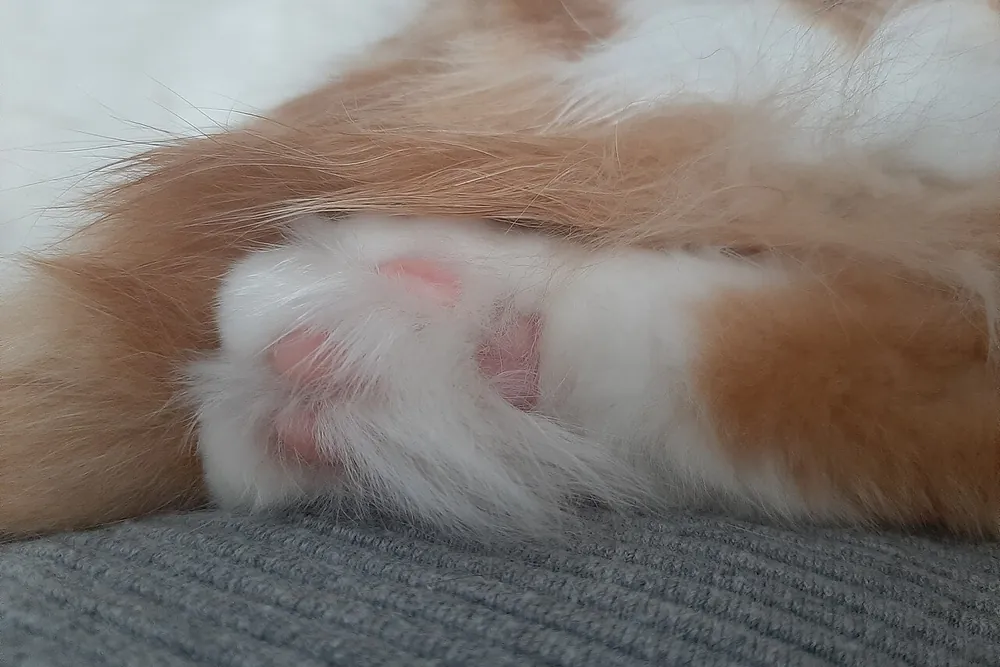
A claw is a hard shell with a living part inside — a blood vessel and a nerve. The job is simple: take off the excess shell and stop before the living part.
Finding the quick
On pale claws you can see it against the light: the pink stripe inside. Cut two or three millimetres beyond it. On black claws you see nothing, so a different method works: trim a little at a time and look at the cut surface. While it is dry and white, keep going. As soon as a dark dot or a moist circle appears in the centre, stop.
The rule is simple: ten small trims beat one that draws blood. For an animal that has been hurt once, claw trimming turns into a fight for years.
When it is time
"Once a month" is a poor guide: claws grow at very different rates, and a dog that walks on asphalt wears them down itself.
If the dog stands on a flat floor and the claws touch it, they are already long. If you hear clicking on tile or laminate, it is definitely time. In cats, the claw catches on a blanket or clothes.
Check the dewclaws separately — they sit higher on the inside of the leg, never touch the ground and never wear down. Those are the ones that grow into the pad.
What to use
A scissor-type or guillotine-type clipper — both work. What matters is that it is sharp: a blunt tool crushes rather than cuts, and that hurts. Human nail scissors split the claw.
Keep styptic powder or a pencil to hand. Not because you will certainly slip, but because hunting for it in a panic with a bleeding paw is a bad plan.
If you hit the quick
There will be more blood than you expect. Press the powder against the cut and hold for half a minute without checking every five seconds. That is usually enough. If bleeding does not stop within ten minutes, go to a clinic.
Do not end the session with apologies and cuddles: the animal will link pain with attention. Finish calmly, give a treat, and next time start with a single claw.
If the animal is already afraid
Break it up. Today, just touch the paw and give a treat. Tomorrow, hold it for three seconds. Then show the clipper without cutting. Then cut one claw and stop. One claw a day is twenty days, and that is a reasonable timeline if the alternative is sedation.
Cats are easier when half asleep: take them on your lap when they are already dozing and press the pad to extend the claw.
When to see a professional
A claw grown into the pad, a swollen toe, limping, or refusing to let the paw be touched at all — that is for a vet, not a clipper. And if every trim ends in a fight, that is a reason too: groomers and clinics do it quickly, and your relationship with your own animal matters more.