
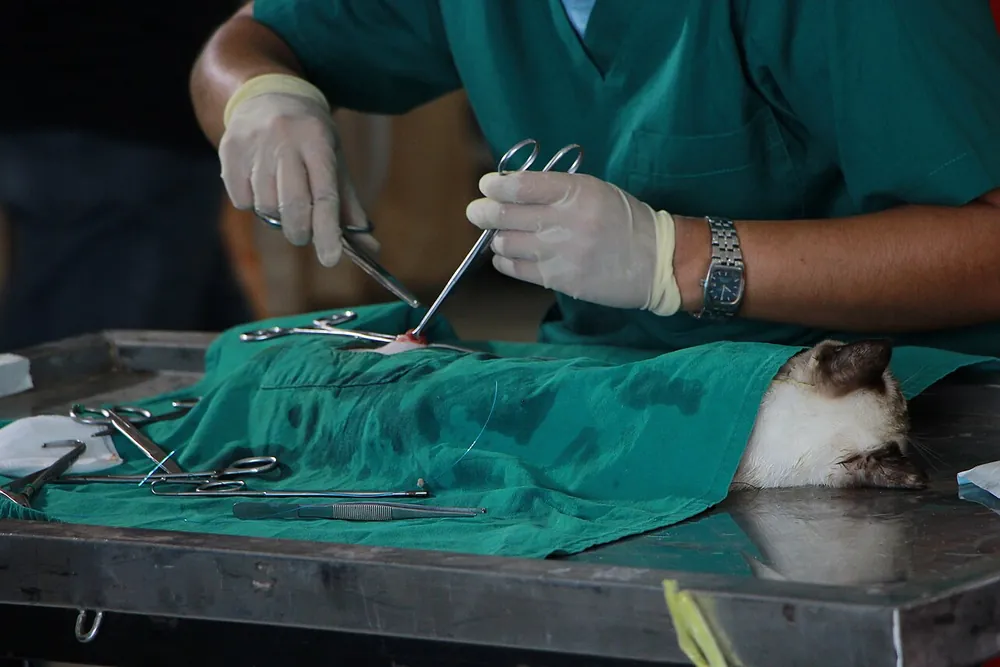
Spaying a cat is a planned operation removing the ovaries, or more often the ovaries together with the uterus. Neutering a male cat removes the testicles and is a noticeably simpler and shorter procedure.
Why
First, the cycles stop. In a cat that has never bred, heat cycles run almost without pause: days of calling, spraying, attempts to get out of a window. It exhausts the animal and the household, and this is when cats fall from open windows.
Second, it removes the risk of diseases linked to sex hormones and to endless unproductive cycles. Discuss the specifics — and how much the risk drops — with your vet: it depends on the age at which the operation is done.
Third, there is nowhere for the kittens to go. "Let her have one litter for her health" is folklore, not medicine; and every litter has to be rehomed, by you.
When
Timing is a conversation with your vet and differs between animals. The general logic: doing it before the first heat gives a greater effect on some risks, but operating too early is not advisable either. Age, weight and breed matter, so the actual date comes from whoever has examined the cat.
During heat the operation is usually postponed: the tissues are engorged and surgery is harder.
Preparation
A pre-operative examination and, if your vet requests it, blood work and a cardiac assessment. This is not an unnecessary expense: anaesthesia is tolerated differently by different animals, and the point of testing is to find out beforehand rather than during.
Fasting before anaesthesia as instructed by the clinic, usually from the previous evening. Water is removed later and also on instruction. The cat must be well: planned surgery is not performed during an active infection.
Afterwards
A recovery suit or a collar until the sutures come out — mandatory, no exceptions. A cat will lick the wound open overnight, and that is the most common reason for a return visit.
For the first day after anaesthesia the animal is unsteady, may feel cold and behave oddly. Keep it warm, on the floor, with no access to heights: coordination does not return immediately, and a jump off a wardrobe ends badly.
Wound care and check-up timing follow the clinic's instructions. Warning signs: refusing food for more than a day, lethargy, growing swelling, redness, discharge from the wound, fever.
About weight
After the operation energy requirements fall; appetite does not. Feed as before and the cat gains weight — that is arithmetic, not "hormones". Recalculate the daily amount using the neutered-animal factor and weigh the cat monthly: half a kilogram gained unnoticed on a four-kilogram cat is twelve percent of body mass.