
The ancestors of the domestic cat lived in deserts and got most of their water from their prey. That is why cats drink little and have a weak sense of thirst. For a cat on dry food this matters: it needs more water from the bowl than its owner tends to think.
How much it needs
A commonly quoted guide is about 40–60 ml of fluid per kilogram of body weight a day — from the bowl and from food combined. For a 4 kg cat that is roughly 160–240 ml a day.
Wet food is about three quarters water, so a cat on wet food drinks little from the bowl — that is normal. A cat on dry food has to drink almost all of it.
Discuss your own cat's needs with a vet: they depend on age, activity, food and health.
How to notice it is not drinking enough
The clumps in the litter tray are small and infrequent. The cat is lethargic. The gums feel dry and sticky.
These are pointers, not a diagnosis. If you notice these signs, take the cat to a vet.
How to help a cat drink more
Put several bowls in different places around the flat — not next to the food and not next to the litter tray. Many cats will not drink where they eat.
Choose a wide, shallow bowl: cats do not like their whiskers touching the sides.
Change the water every day and wash the bowl. Cats can smell stale water and residue.
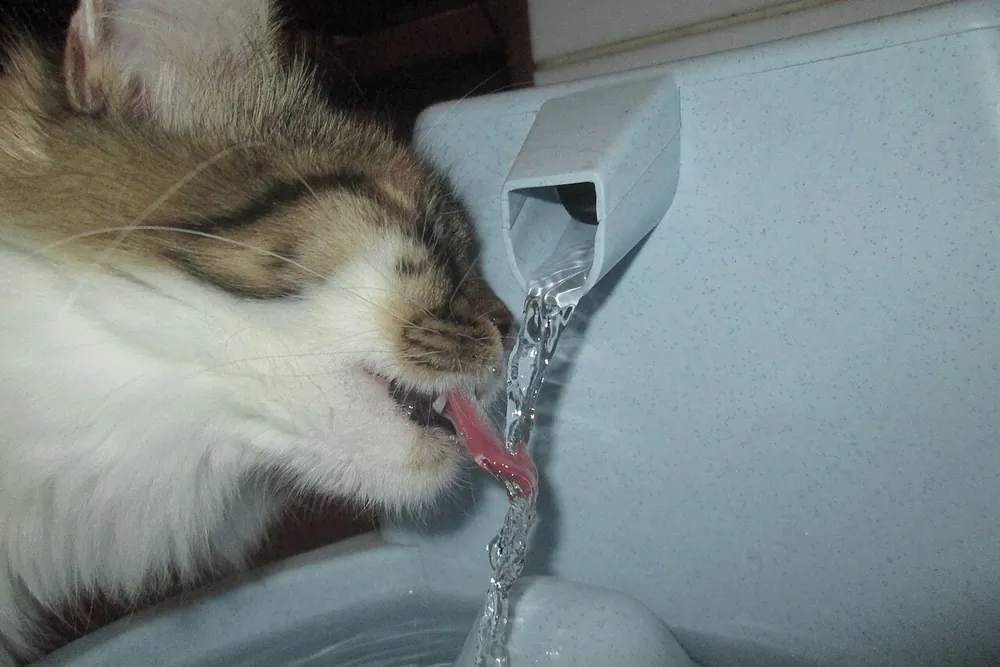
Try running water. Many cats prefer to drink from a stream — which is why they are drawn to the tap. A fountain with a filter provides that kind of water all the time, not only when you turn the tap on.
Add wet food: even one wet meal a day noticeably increases fluid intake.
When a cat drinks too much
If a cat suddenly starts drinking noticeably more than usual and using the litter tray more often, that is also a reason to see a vet. Strong thirst can come with various conditions, and only a vet can find the cause — through an examination and tests.
Food and portions
Mr. Petman works out the daily food amount from the cat's weight and activity. If you switch your cat from dry food to wet or mixed feeding, recalculate the portions in the pet profile.