
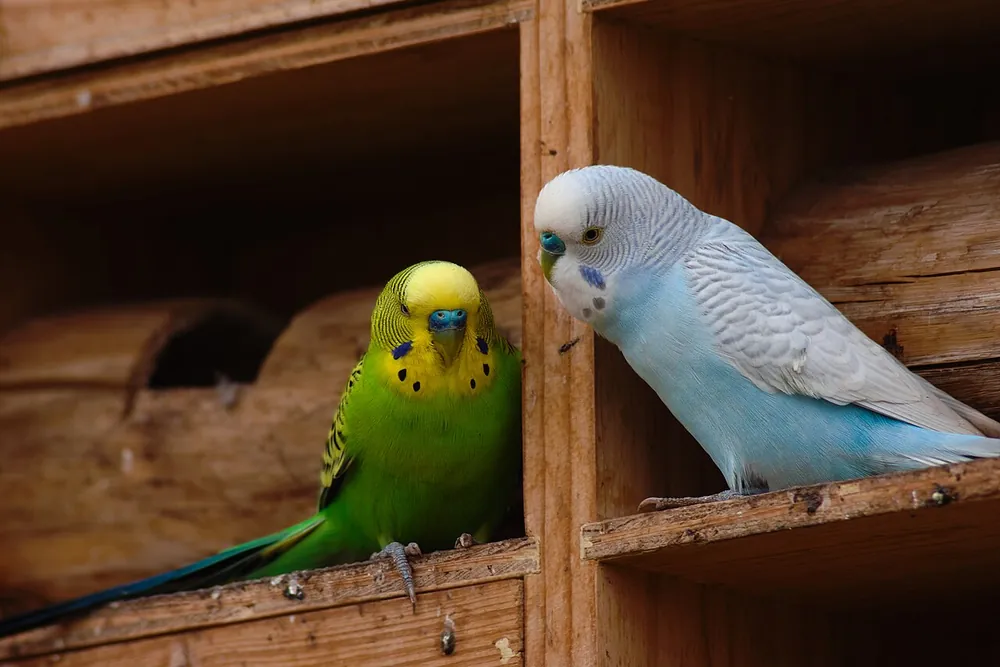
The short answer: a parrot screams because it works. In the wild, calling is how a bird finds its flock; at home the flock is you, and the call reliably brings you into the room.
Before changing anything, separate screaming into three kinds.
Calling you should not try to stop
At dawn and dusk birds call to each other. This is normal and usually short-lived. You cannot remove it, and you should not want to: a bird that is silent all day is more often a sick bird.
If the mere presence of a voice in the flat is the problem, the problem is not the bird.
Screaming caused by conditions
Before working on behaviour, check the obvious:
**Sleep.** Less than 10–12 hours of darkness leaves a bird overstimulated and noisy.
**Cramped and bored.** A bird with no flight and nothing to do screams out of emptiness.
**Loneliness.** Budgies are flock birds. If you are out all day, a second bird solves more than any technique.
**Fear.** New furniture, a cat on the windowsill, a cage in a busy doorway.
**Hormones.** A permanently long day and nest-like corners trigger breeding behaviour in a hen, and screaming comes with it.
**Pain.** A voice that has suddenly changed, or screaming with no trigger, is a reason to see an avian vet before deciding it is character.
Screaming we reinforced ourselves
Here is the uncomfortable part. The bird screams; a person comes into the room, covers the cage, shouts back, hands over a seed to shut it up. To a parrot all of this is a reward: it called and the flock answered. Telling it off works exactly like affection — it is attention.
What to do:
**Do not come in while it is screaming.** At all. Come in once in ten times and you have taught the bird to scream for longer.
**Come in for silence.** The bird goes quiet for a couple of seconds — you appear, talk to it, offer a treat. Gradually lengthen the pause.
**Teach a contact call.** A whistle or a short word that you always answer. The bird needs a way to check that you are there; give it a quiet one, or it will keep the loud one.
**Answer by voice from the other room.** That is what calling is for: confirming the flock is still around.
The first days will be worse than before: the bird tries louder and longer now that the old method has stopped working. That is an expected stage, not a failure.
What not to do
Covering the cage as punishment — a cloth means sleep, and blurring those signals is harmful.
Spraying water, banging on the cage, shouting back. It frightens the bird and damages trust, and the screaming returns anyway — only now the bird is afraid of you too.
Sending the bird to stay with friends to wait it out. A move is a stressful event for a parrot, and screaming usually increases afterwards.
How long it takes
Weeks, not days — and the key condition is the same response every time. If one person in the house ignores the screaming and another comes running, the bird learns to call that other person.
If nothing changes in a month, or the screaming started abruptly, see an avian vet: rule out pain and hormonal drive before working on training.