
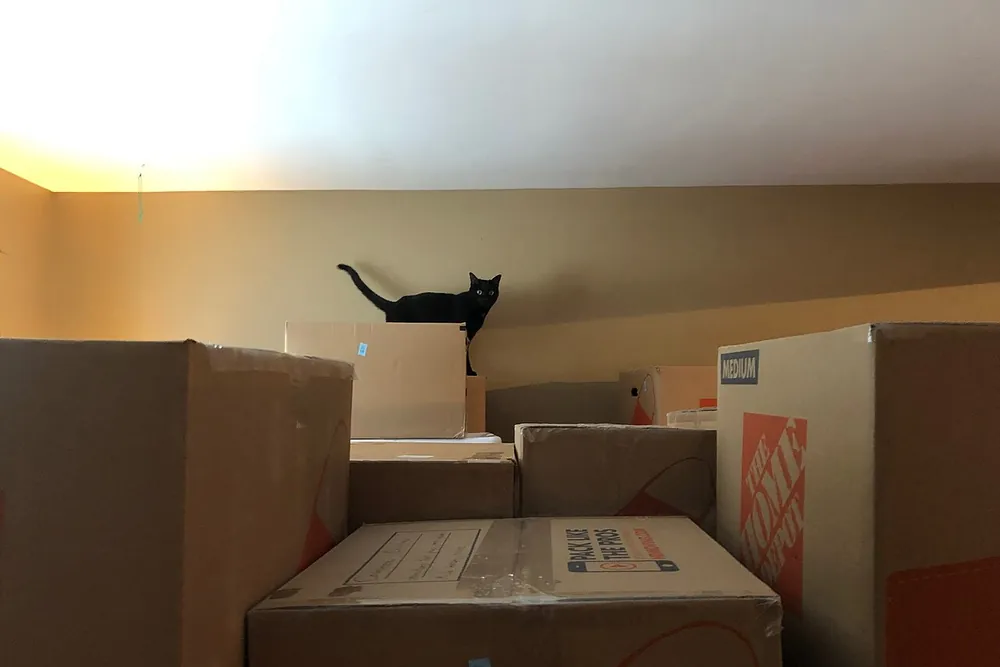
For a cat, moving house is one of the biggest shocks there is. Its world is a territory of smells, routes and hiding places, and in a single day it disappears. The good news: most of the stress can be taken out with preparation.
One or two weeks before
Get the carrier out early and leave it open in a room. Put bedding and a treat inside — let the carrier become an ordinary place rather than a sign of a trip to the vet.
Do not change the food or the litter before the move — there will be enough change as it is.
Check that the cat has a microchip or an ID tag, and update the phone number in its pet profile. Cats go missing most often during a move: doors are open and there are strangers around.
On moving day
Shut the cat in one room with its litter tray, water and carrier before the movers arrive. Put a note on the door: "Do not open — cat inside." Empty that room last.
Transport the cat in a carrier, not in your arms and not in a box. In the car, put the carrier on the floor or strap it in, and do not open it on the way. If the cat gets car sick, do not feed it for a few hours before the journey.
In the new place
Start with one room. Litter tray, water, a bowl, a bed, a hiding place — and familiar things that smell of the old home: a blanket, the scratching post, one of your T-shirts. Open the carrier and do not pull the cat out — let it come out on its own, even if that takes a few hours.
Before letting the cat beyond that room, check the flat: gaps behind the kitchen units, ventilation openings, open windows. A mosquito net will not hold a cat — you need a cat-proof screen or closed windows. Falls from windows are one of the common causes of serious injuries in pet cats.
Expand its territory gradually, one room at a time, over several days. Keep the old routine: meals and play at the same times as before.
How long it takes
Most cats need from a few days to two or three weeks. In the first days the cat may hide, eat less and sleep more — that is normal.
Take the cat to a vet if it has not eaten for more than a day, has not used the litter tray for more than a day, or stays unusually anxious for more than a week. In cats, going without food for long is dangerous in itself, so do not wait.
If your cat used to go outside
Do not let a cat that used to go outdoors out in the new place for at least three to four weeks: it may try to return to its old territory and get lost.