
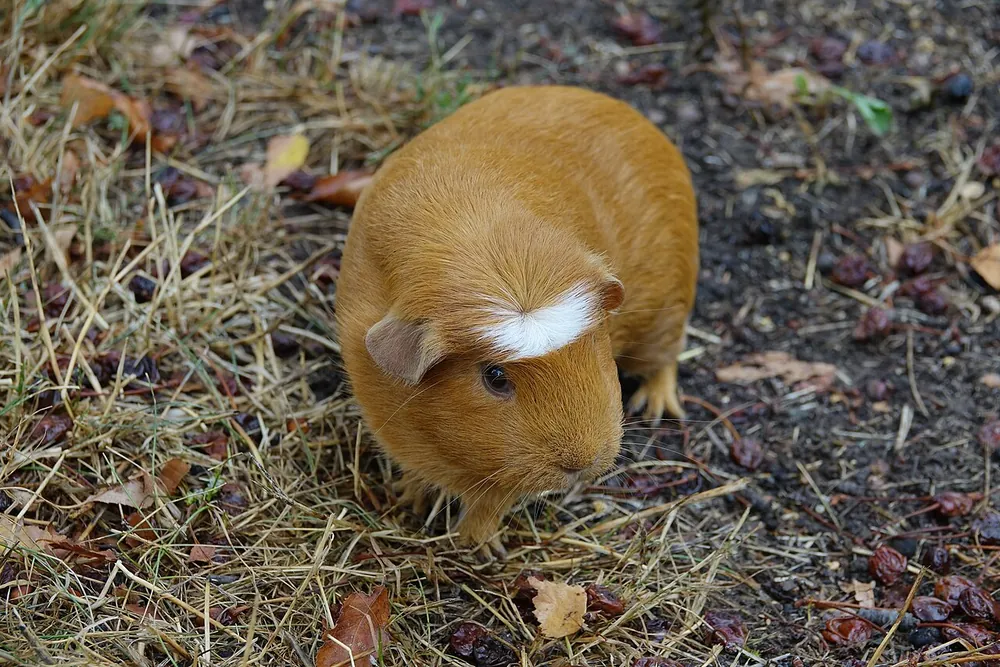
A guinea pig looks like an easy pet: it does not bite, does not escape, and squeals happily at the fridge. Its difficulty lies elsewhere — in two things you cannot postpone.
First: it cannot make vitamin C
Like humans, guinea pigs do not synthesise vitamin C and must get it from food every day. Without it they develop scurvy: an unsteady gait, refusal to eat, painful joints.
For a healthy adult, a commonly quoted guide is on the order of 10–30 mg of vitamin C per kilogram of body weight per day, and more during illness or pregnancy. The exact amount for your animal is set by a vet.
Sources: guinea-pig pellets with added vitamin C (it degrades over time — check the production date, not only the expiry), fresh sweet pepper, parsley, dill, leaf lettuces.
Vitamin drops in the water bottle work poorly: the vitamin breaks down quickly in light and warm water, and many pigs dislike the taste and then drink less.
Second: it does not live alone
Guinea pigs are herd animals. Kept alone they become listless and fearful — that is the housing, not the character.
The best arrangement is two same-sex pigs, or a pair with a neutered male. Keeping two is barely harder than keeping one, and the difference in behaviour is visible immediately.
Living with a rabbit is not a substitute for company: they speak different languages, eat different food, and a rabbit can injure a guinea pig with a single jump.
The cage
Guinea pigs do not climb or jump, but they do run — they need floor area, not levels.
A guide for two pigs is from 0.7–1 m² of solid floor. A glass vivarium or a large tray on a shelf is usually more practical than a pet-shop "rodent cage", and cheaper.
The floor must be solid. Use wood or paper litter, or fleece liners with an absorbent layer. Corn and coniferous shavings are better avoided.
Inside: a shelter with two exits (a dead end makes a pig feel trapped), a hay rack, a heavy bowl, a water bottle, a tunnel.
Food
Hay is the basis, available around the clock, as for rabbits. Fresh greens every day. Guinea-pig pellets in limited amounts, as advised by your vet.
Do not give: nuts, seeds, grain mixes, bread, dairy, sugary shop treats.
Care
Trim claws every four to six weeks. Long-haired pigs need brushing, or the coat mats.
Do not bathe without a reason: it is stressful, and guinea pigs chill easily.
They suffer from draughts and heat alike. In a Kazakh summer overheating is the greater risk: above 26–28 °C a guinea pig is already struggling.
Signs that mean a vet
Not eating or not drinking. Wheezing, discharge from the nose or eyes. An unsteady gait. Bald patches and scratching. Sudden weight loss.
Weight is the earliest signal: you cannot see thinness under the fur, but the scales show it a week before anything is visible. Weigh weekly and write it down — in Mr. Petman that becomes a chart rather than numbers you try to remember.