
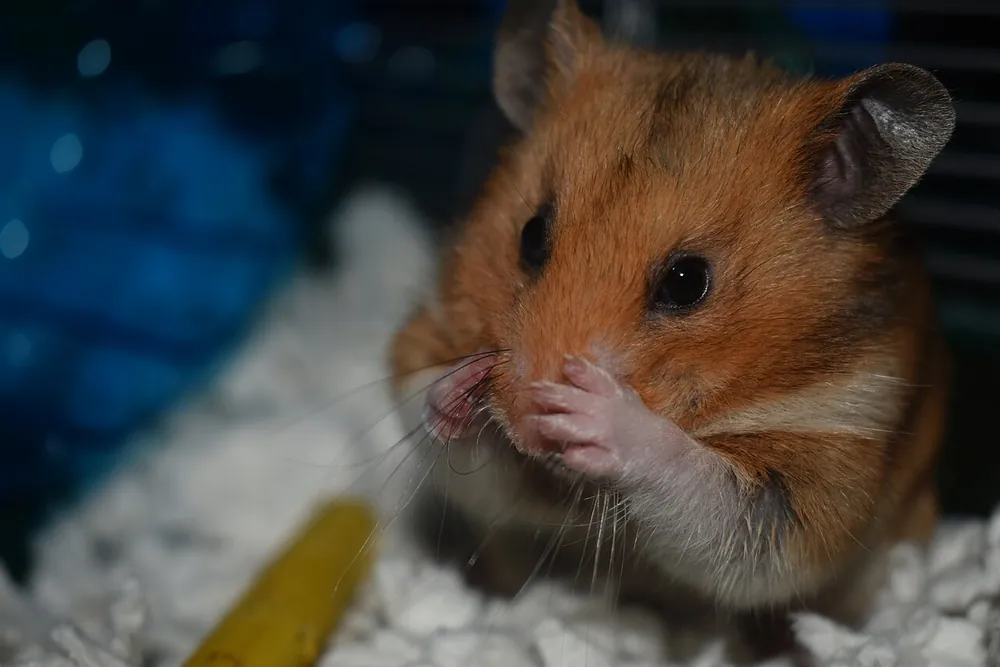
"Let's get a hamster, it's small" is the most common mistake when choosing a child's first pet. Size says nothing about how demanding an animal is, or about whether a child will get on with it.
Here are the three usual candidates, compared on what matters in practice.
Hamster
Lives 2–3 years. Sleeps during the day and is active at night — exactly when the child goes to bed.
A Syrian hamster lives strictly alone: add a second and there will be a fight, often a fatal one. Dwarf hamsters are sometimes kept in pairs, but they too frequently have to be separated.
A woken hamster bites — not out of malice, but out of sleep. For a child who wants to pick the animal up during the day, that is a poor combination.
Hamsters need a deep layer of bedding to burrow in and a wheel at least 20–30 cm across: in a small wheel the back is forced into a curve.
**Suits:** an older child who enjoys watching rather than holding.
Guinea pig
Lives 5–8 years. Active in the daytime, vocal towards people, almost never bites.
Two conditions matter: company (one pig is a bored pig — keep two) and vitamin C in food every day.
A guinea pig is easy to pick up, does not struggle the way a hamster does, and will sit calmly on a lap. That is why it is usually the best choice for a family with a child.
The honest downside: two pigs mean noticeably more space and cleaning than one hamster, and daytime noise.
**Suits:** a family with a child of about five and up, ready for a metre of cage and eight years of care.
Fancy rat
Lives 2–3 years, and that is the main drawback: children take the loss hard, and rats go quickly.
In return, a rat is the brightest and most sociable of the three: it knows its people, comes to hand, learns tricks and likes riding on a shoulder.
Rats are social too — keep at least two, preferably same-sex.
**Suits:** an older child who wants to interact with a pet rather than simply watch one.
True for all three
**An adult is responsible for the animal.** A child can feed, clean and play, but an adult watches its condition and takes it to the vet. Noticing that an animal is hunched and off its food is not a skill a child is expected to have.
**Pet-shop cages are usually too small.** Look at floor area, not at levels and tubes.
**Not every clinic treats them.** You need an exotics vet — find one in advance and save the number.
**Weight is the key instrument.** Once a week on kitchen scales: in small animals weight loss comes before any other sign. In Mr. Petman it becomes a chart that shows what the eye cannot.
What not to do
Getting a pet "as a trial" to see whether the child copes. You are the one who will cope.
Giving an animal as a surprise. A surprise is good for a present and bad for a creature that will live in the house for years.