
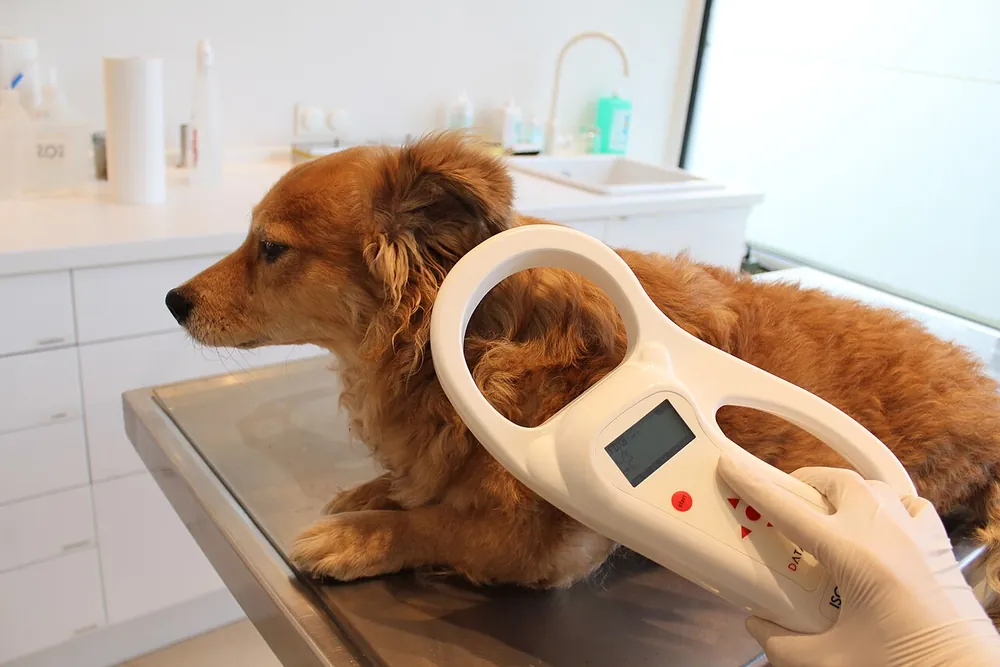
Since 28 August 2026 Kazakhstan requires domestic animals to be registered. A dog or cat must be microchipped and entered into the state database — this is law, not advice.
What a microchip is
A glass capsule the size of a grain of rice. A vet injects it under the skin between the shoulder blades with an ordinary syringe. The procedure takes seconds and feels comparable to a vaccination. No anaesthetic, no stitches, no restrictions afterwards.
A chip is not a transmitter and not a GPS tracker. It has no battery and emits nothing. It holds a single fifteen-digit number. A scanner held near the shoulder reads the number, and the number leads to the owner in the database. Without a scanner the chip is useless — which is why an ID tag on the collar still matters.
Where to go
Any veterinary clinic with access to the state database. The clinic implants the chip and registers the animal — two halves of one procedure, and the second matters more. An animal that is chipped but not registered is, legally, still unregistered.
Check both on the spot. Ask the vet to scan the chip immediately after implanting it and show you that the number reads. Then ask for confirmation that the registration went through. If the clinic says it will register the animal later, go elsewhere.
What it costs
The chip and the vet's time are inexpensive — one of the cheapest procedures in veterinary practice. The clinic quotes the exact price; it varies by city and by chip manufacturer. Registration in the state database is free.
What happens without one
An administrative fine. It is calculated in MCI units and revised every January, so we show the current amount on our page about the law, where it is recalculated automatically rather than rewritten by hand once a year.
The second consequence has nothing to do with fines and matters more in practice. A found animal without a chip cannot be identified. Someone who picks up your dog may take it to a clinic, and the clinic can do nothing. With a chip that takes one minute.
What to do afterwards
Write the chip number somewhere it will not get lost: phone notes, the veterinary passport, your pet's profile. Once a year, at a routine appointment, ask the vet to confirm the chip still reads — over the years it can migrate a few centimetres under the skin, and the vet needs to know where to look.
If you change your phone number or move house, update the database. A chip that leads to a disconnected number saves an animal exactly as well as no chip at all.